
Some churches tell me they don't believe in branding. I understand the instinct ("brand" sounds like something done to soft drinks). But that sentence usually confuses two different things.
Branding is expression: the logos, colors, type, language, visuals, environments, and designed signals a church uses to tell its story.
Brand is perception: what people actually believe, remember, feel, and expect after encountering your church.
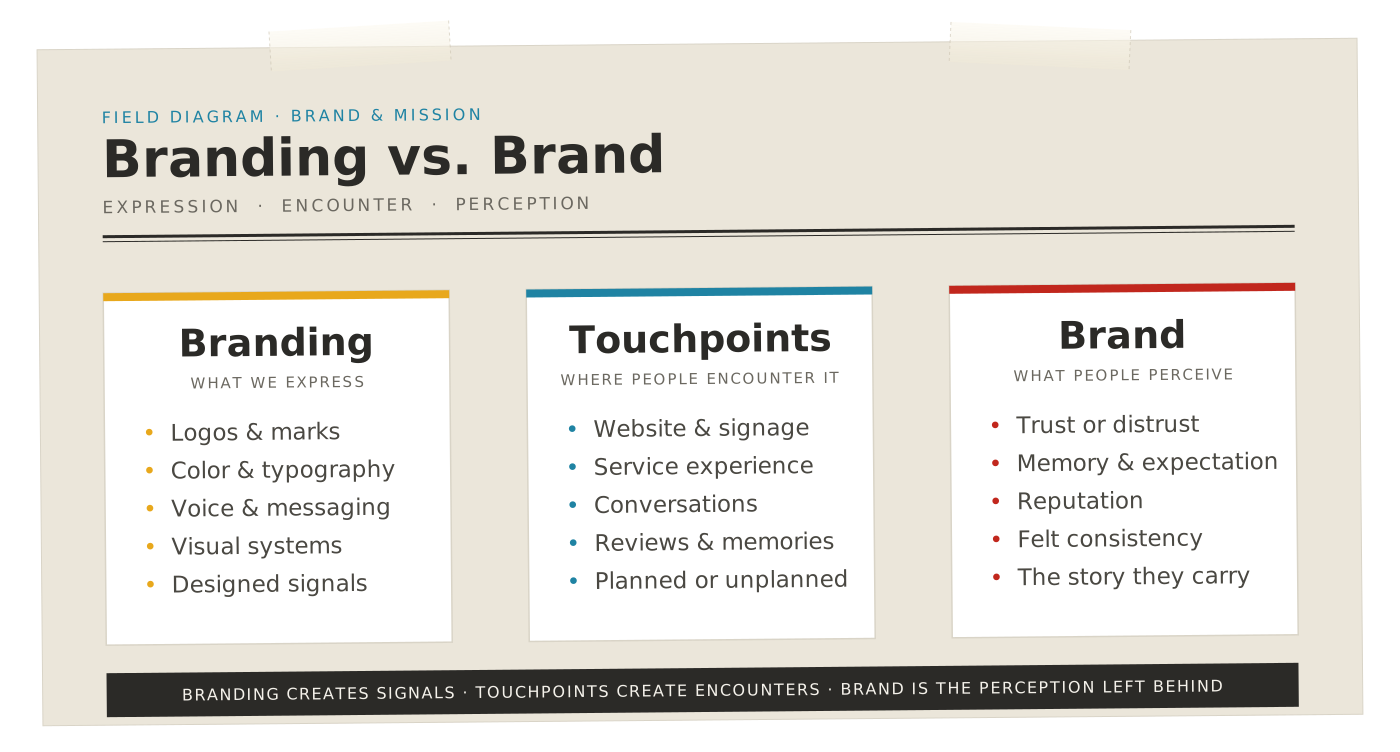
You can choose not to care about branding. You can't choose not to have a Brand. The parking lot has an opinion. The projector font has an opinion. The way your volunteers answer email has an opinion.
You don't get to choose whether people are forming perception. You only get to choose whether that perception is being stewarded intentionally or accidentally.
Accidental Brands are still Brands
An accidental Brand says things you'd never say on purpose. The website that hasn't changed since the last building campaign says "we peaked." Six ministries with six logos say "we're six churches renting one lobby." A crooked banner says "close enough" (about the banner, and by extension, about everything).
None of this means the church doesn't love people. It means the signals are unsupervised. And unsupervised signals default to entropy, not to the gospel.
Intentional is not the same as slick
The goal isn't to look like a tech company. A church Brand stewarded well is honesty with craft: this is who we are, this is who we're for, and every touchpoint agrees. Small churches can do this as well as big ones. Intentionality is free. Consistency costs discipline, not money.
When we built Forge from a blank page, the Brand wasn't a logo delivered at the end. It was the first decision: who is this church for, and what should those people feel at every single touchpoint from Instagram to launch day? The branding (the marks, the type, the announcements) was that one decision given visible form and repeated.
Your church is already telling a story about itself. Stewarding that story on purpose isn't vanity. It's taking responsibility for what you're already saying.