

Ask your team what they're working on and you'll hear the word "project" used to mean four completely different things. The Christmas season? A project. The sermon series that carries it? Also a project. The invite card inside that series? Project. Fixing the typo on the invite card? Believe it or not: project.
When one word means everything, planning meetings become archaeology (everyone digging to figure out what layer they're actually discussing).
The confusion costs more than a muddled meeting, because these four are not four sizes of the same thing. Each one needs something different before it can even begin, and each one is aiming at a different goal. A campaign can't start until you know the season and the people you are trying to reach. A task only needs a clear instruction and a little time. Give a task the approvals and runway of a campaign and it never ends. Ask a campaign to launch on a task's thin brief and it wanders for months with no target.
That is why the right name matters, and why it is not busywork. Naming the work is how you set it up to succeed before anyone lifts a finger, because the name tells you what a piece needs to begin and what "done" will mean. Get the altitude right and you are already pointed at the goal.
The fix is a vocabulary with altitude built in.
Four words instead of one
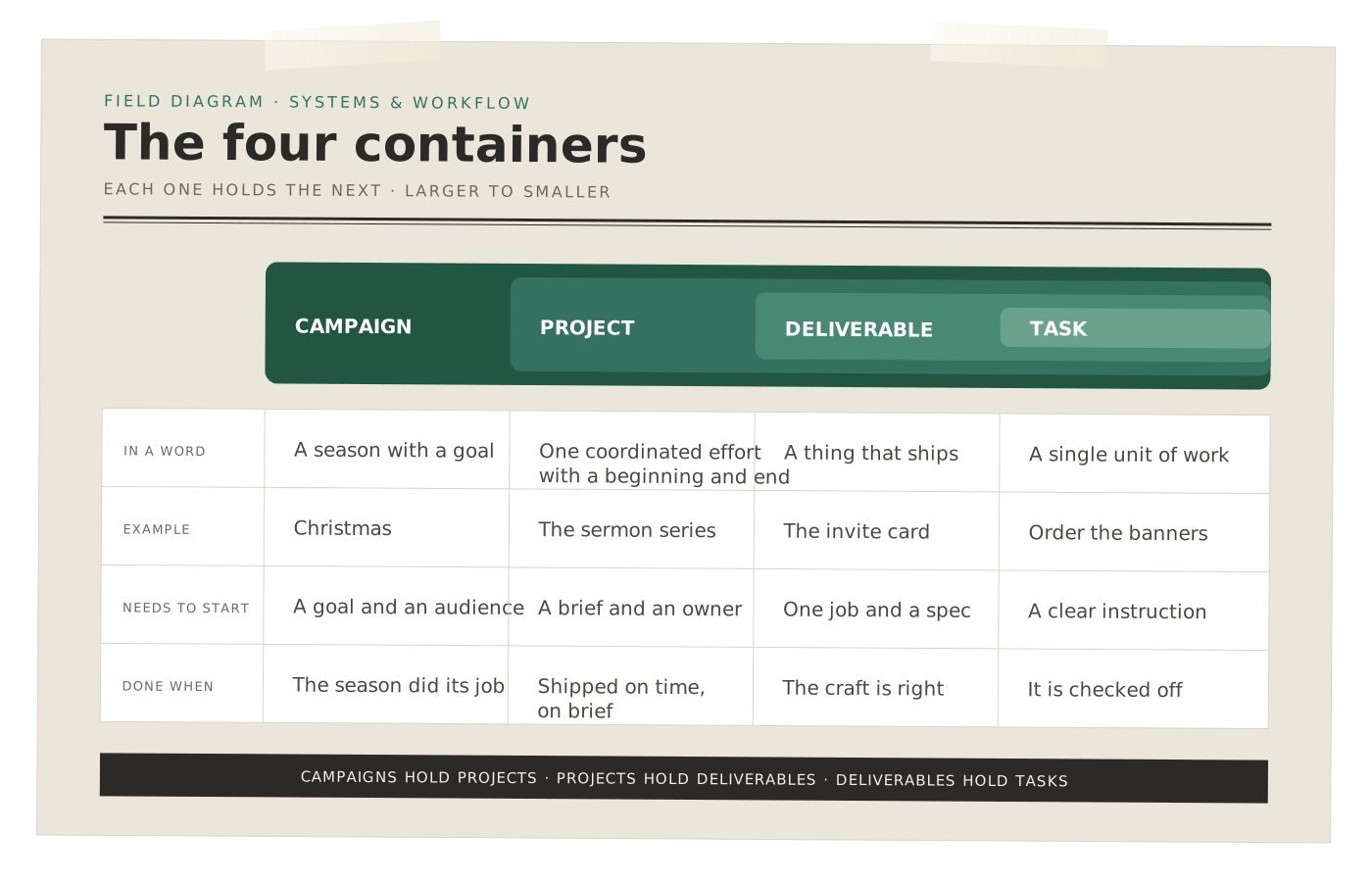
- A campaign is a season with a goal (Christmas, a capital push, a launch). It has a big audience question and a date range.
- A project is one coordinated effort inside of a campaign, with a start and an end: the sermon series package, the launch event.
- A deliverable is a thing inside of a project that ships: the invite card, the trailer, the stage design.
- A task is a unit of work inside a deliverable: write the copy, cut the trailer, order the banners.
Why the altitude matters
Each level has a different owner, a different meeting, and a different definition of done. Campaigns get evaluated by goals and outcomes (did the season do its job?). Projects get evaluated by delivery (on time, on brief, on budget). Deliverables get evaluated by craft. Tasks just get done.
Mix the levels and you get familiar dysfunctions: a room full of leaders art-directing a task while the campaign has no goal. A "project" that never ends because it was actually a ministry campaign. A volunteer crushed under a "task" that was secretly a whole project wearing a small name.
Did any of it matter?
There is a quieter payoff here, and it answers one of the hardest questions in all of communications: attribution. Did what I made actually make a difference? How much? How did my part contribute to the whole?
When the levels nest cleanly, that question has an answer. A task rolls up into a deliverable, a deliverable into a project, a project into a campaign. The invite card you designed is not just a card. It is part of the series that filled the room, part of the Christmas campaign that did its job. The hierarchy lets you trace a single afternoon of work all the way up to the outcome it served. Your effort stops being invisible, because you can finally see where it landed.
You can finally share the load
A named, nested workload is also a shareable one. When every piece has a size and a place, you can hand one off without handing off the whole burden. A freelancer can own a deliverable. A volunteer can take a task. Neither of them has to hold the entire campaign in their head to do good work, because the hierarchy already holds it for them.
This is how a church grows its bench. Most people would love to help, but few can absorb the stress of an open-ended, undefined job. Give them a task with a clear edge and they can step in, contribute something real, and step back out without carrying it home.
A system is what lets you say yes to a willing volunteer instead of shielding them from the chaos by doing everything yourself. (This is one of the controls I wrote about in Why Your Church Communications Feel Chaotic.)
Try the ladder
Next planning meeting, take whatever's on the whiteboard and sort it: campaign, project, deliverable, task. The arguments get shorter almost immediately, because most disagreements were never about the work. They were two people at different altitudes, each certain the other was in the wrong meeting.